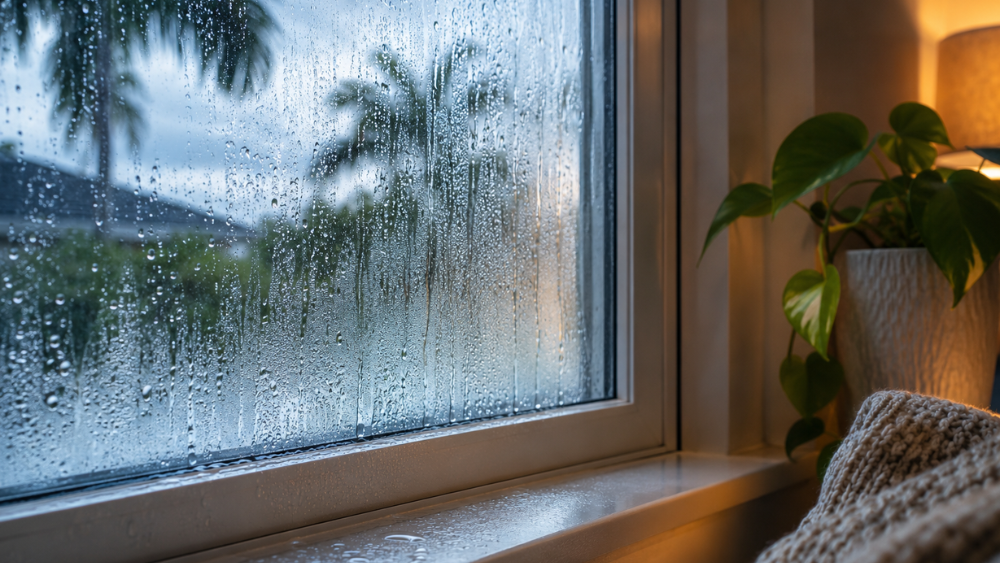
Although Florida winters are much milder than those in other parts of the country, many homeowners are surprised to find moisture collecting on their windows during cooler mornings.
If you’ve noticed water droplets forming on the inside of your windows, you’re not alone.
This common issue is known as window condensation, and while it isn’t always a sign that something is wrong with your windows, excessive moisture can lead to problems if left unaddressed.
Over time, persistent condensation may contribute to mold growth, damage to window frames, and reduced indoor comfort.
In this guide, we’ll explain why moisture forms on windows during winter, when it’s considered normal, and what you can do to reduce it.
Why Does Moisture Form on Windows?
Condensation occurs when warm, humid indoor air comes into contact with a cooler glass surface.
As the warm air cools, it can no longer hold the same amount of moisture, causing water droplets to form on the glass.
This process is similar to what happens when a cold beverage “sweats” on a warm day.
While condensation is a natural occurrence, excessive moisture should not be ignored.
Is Window Condensation Normal?
In many cases, yes.
Seeing a small amount of condensation during cooler mornings is fairly common, especially when outdoor temperatures drop overnight.
However, condensation that occurs frequently or remains for long periods may indicate excessive indoor humidity or ventilation issues.
If moisture appears every day throughout the winter, it’s worth investigating the cause.
Common Causes of Moisture on Windows
Several factors can contribute to condensation inside your home.
High Indoor Humidity
Florida homes naturally experience elevated humidity levels throughout much of the year.
Indoor activities such as:
- Cooking
- Showering
- Washing clothes
- Drying laundry indoors
all release additional moisture into the air.
If this humidity isn’t properly controlled, condensation becomes much more likely.
Poor Air Circulation
Rooms with limited airflow often experience higher humidity levels.
Keeping curtains closed all day or blocking air vents with furniture can prevent warm air from circulating around your windows.
As a result, moisture remains on the glass for longer periods.
Cooler Outdoor Temperatures
Even though Florida doesn’t experience harsh winters, overnight temperature changes are enough to cool window glass.
When warm indoor air meets that cooler surface, condensation naturally develops.
The greater the temperature difference between indoors and outdoors, the more noticeable the condensation may become.
Older or Inefficient Windows
Older windows often provide less insulation than modern impact windows.
Poor insulation allows the interior glass surface to become colder, increasing the likelihood of condensation.
If your windows are aging or have damaged seals, moisture problems may become more frequent.
Can Moisture Damage Your Home?
Occasional condensation usually isn’t a cause for concern.
However, when moisture remains on windows day after day, it can contribute to several issues, including:
- Mold growth
- Mildew
- Peeling paint
- Damaged wood trim
- Water stains
- Deteriorating window frames
Addressing excessive moisture early helps prevent more costly repairs later.
How to Reduce Moisture on Your Windows
The good news is that there are several simple ways to reduce condensation and improve your home’s indoor environment.
Control Indoor Humidity
Maintaining indoor humidity between 30% and 50% can significantly reduce condensation.
To help control humidity, consider:
- Running your air conditioner when needed
- Using a dehumidifier
- Turning on bathroom exhaust fans after showers
- Using kitchen exhaust fans while cooking
Lower humidity means less moisture available to condense on your windows.
Improve Ventilation
Better airflow allows moisture to evaporate more quickly.
Simple steps include:
- Opening blinds during the day
- Keeping furniture away from windows
- Using ceiling fans
- Allowing air to circulate throughout your home
These small adjustments can make a noticeable difference during cooler months.
Wipe Away Condensation Promptly
If you notice moisture forming on your windows, don’t let it sit for long periods.
Using a clean, dry microfiber cloth to remove excess water can help prevent moisture from soaking into surrounding materials such as wood trim or drywall.
This simple habit can reduce the likelihood of mold and water damage over time.
When Condensation Could Indicate a Bigger Problem
Not all window moisture is caused by indoor humidity.
In some cases, persistent condensation may point to issues with the window itself.
Signs that it’s time to investigate further include:
- Condensation that remains for most of the day
- Water collecting between glass panes
- Damaged or deteriorating window seals
- Drafts around the window frame
- Visible water intrusion after rain
If you notice condensation trapped between the panes of glass, the insulated glass unit may have experienced seal failure and should be evaluated by a window professional.
Can Impact Windows Help Reduce Condensation?
While no window can completely eliminate condensation, modern impact windows are designed to provide better insulation and tighter weather seals than many older windows.
Professionally installed impact windows may help:
- Improve thermal performance
- Reduce air leaks
- Maintain more consistent indoor temperatures
- Limit moisture intrusion
- Increase overall energy efficiency
For homeowners with aging or inefficient windows, upgrading to modern impact windows can improve comfort while reducing some of the conditions that contribute to condensation.
The Connection Between Condensation and Mold
Moisture alone isn’t mold—but it creates the conditions mold needs to grow.
If condensation is allowed to remain on windowsills, frames, or surrounding trim day after day, mold spores may begin developing within 24 to 48 hours.
This is especially common in humid climates like Florida.
Preventing condensation is one of the simplest ways to reduce the risk of mold growth around your windows.
Common Mistakes Homeowners Make
Many homeowners unintentionally make condensation problems worse.
Here are a few mistakes to avoid.
Ignoring Daily Condensation
A small amount of moisture may seem harmless, but allowing it to accumulate every day can eventually damage surrounding materials.
Wiping away condensation regularly helps prevent long-term issues.
Keeping Humidity Too High
Many people don’t realize how humid their home actually is.
Using a hygrometer to monitor indoor humidity can help you determine whether a dehumidifier or improved ventilation is needed.
Blocking Airflow Around Windows
Heavy curtains, furniture, or permanently closed blinds can trap humid air against the glass.
Allowing air to circulate freely helps moisture evaporate more quickly.
Waiting Too Long to Replace Aging Windows
Older windows with worn seals or poor insulation are often more susceptible to condensation.
If moisture problems continue despite improving indoor humidity, it may be time to consider replacing outdated windows.
Why Choose Hurricane Window & Screen?
For over 40 years, Hurricane Window & Screen has helped homeowners throughout South Florida improve their homes with premium impact windows and expert installation.
Our team understands the unique challenges created by Florida’s climate, including humidity, heavy rainfall, and seasonal weather changes.
Whether you’re replacing aging windows or upgrading to modern impact windows, we’re committed to providing solutions that improve comfort, energy efficiency, and long-term protection.
When you choose Hurricane Window & Screen, you’ll receive:
- Premium impact window products
- Professional installation
- Personalized recommendations
- Experienced South Florida specialists
- Exceptional customer service
Frequently Asked Questions
Is moisture on windows during winter normal?
Yes. A small amount of condensation on cooler mornings is common, especially when warm indoor air meets a colder glass surface.
Why do my windows have condensation every morning?
Frequent condensation is usually caused by high indoor humidity combined with cooler outdoor temperatures.
Improving ventilation and controlling humidity often helps reduce the problem.
Is condensation between window panes a bad sign?
Yes. Moisture trapped between panes often indicates a failed window seal, which may require professional repair or replacement.
Can impact windows reduce condensation?
Modern impact windows provide better insulation and improved weather sealing, which may help reduce the conditions that contribute to condensation.
Does condensation cause mold?
Condensation itself doesn’t create mold, but persistent moisture can provide the environment mold needs to grow if it isn’t addressed.
Keep Moisture Under Control All Winter Long
A little condensation on your windows during cooler weather is often normal, but excessive or persistent moisture shouldn’t be ignored.
By controlling indoor humidity, improving ventilation, and maintaining your windows, you can reduce condensation and help protect your home from mold, water damage, and unnecessary repairs.
If your current windows are outdated or showing signs of seal failure, Hurricane Window & Screen can help. Our experienced team provides premium impact window solutions designed specifically for Florida homes, delivering improved comfort, energy efficiency, and reliable performance throughout the year.
Contact Hurricane Window & Screen today to schedule your free consultation and learn how modern impact windows can help protect your home in every season.